Security Risk Management: Where Do We Actually Stand Right Now?
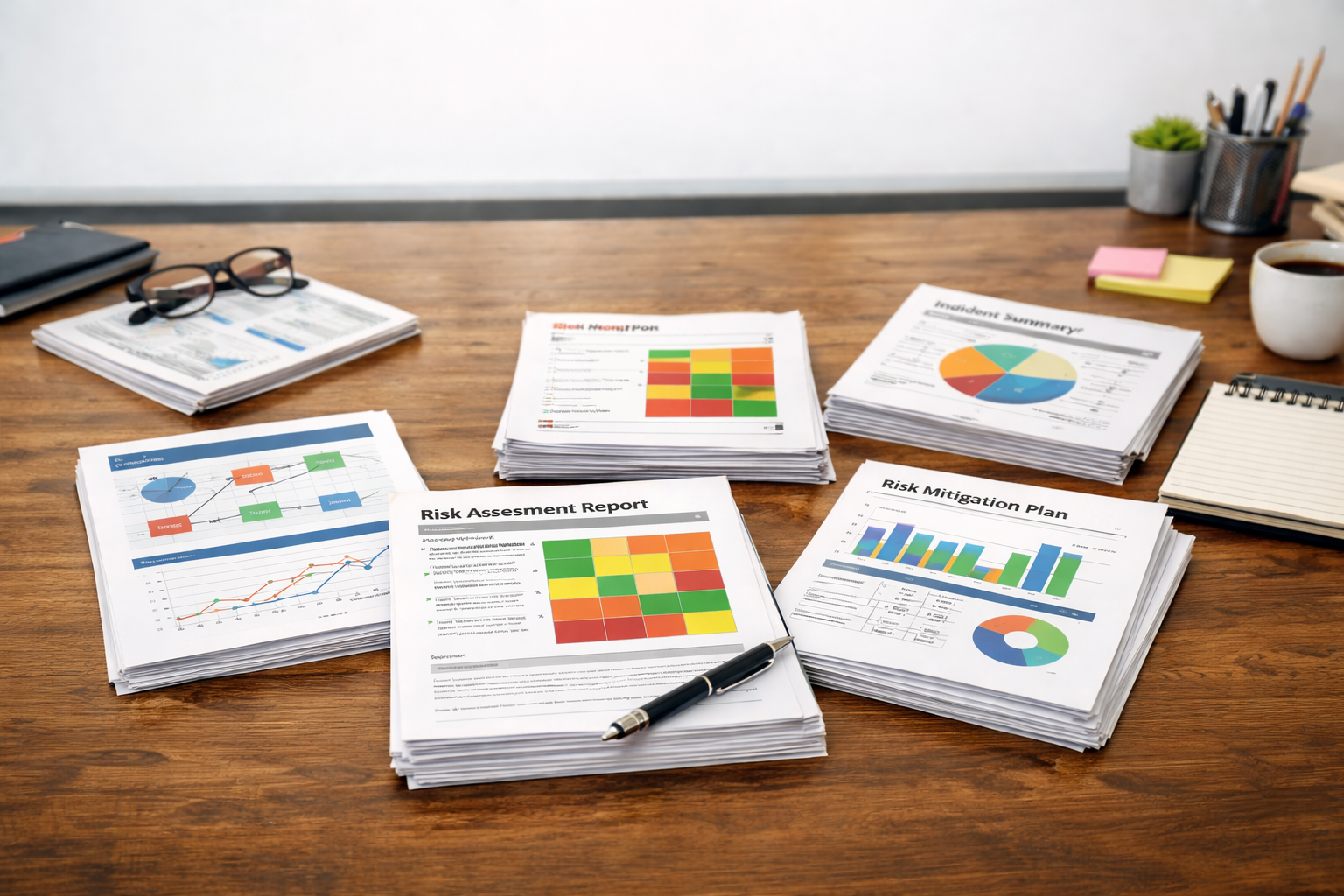
Security Risk Management: Where Do We Actually Stand Right Now?
Rethinking visibility and alignment in a fragmented world
When it comes to 'the Security Risk', the sticking point for most organisations isn't usually knowledge.
People often understand their environments quite well. Papers look solid, slides are polished,
people nod along—and yet, when you try to bring it all together, especially across different risk domains,
things often start to wobble.
The issue shows up when everything needs to come together—quickly, clearly,
without debate over where we stand or which document is current.
Risk registers here, risk treatment plans over there, audits somewhere else. Each one tidy on its own.
Put them together under pressure and things get… fuzzy. Not broken
in an obvious way. Just misaligned enough to matter when timing gets tight.
A lot of teams still approach risk through documentation. Understandable. That’s how
compliance has worked for years – produce the right artefacts, keep them updated, show
evidence when asked. But can the system operate, in real conditions, with real people, under time pressure?
That’s the test that keeps coming up, whether explicitly or quietly in the background.
Risk assessments need to move. Static snapshots lose relevance quickly, especially in
environments where new business activities pop up, staff rotate, suppliers come and go.
A document written six months ago might still read well, but it doesn’t necessarily describe what’s
happening now. And when it comes to responsibility and decision-making, this settles higher up the chain.
For Leadership to be engaged, they need to clearly see and understand the risk and its relevance.
Not in asymbolic way. In a practical one.
Everything connects, whether you plan for it or not
In practice, security domains overlap constantly.
A physical incident disrupts operations. A disruption triggers continuity planning. Travel issues
become duty-of-care questions. It all folds into one another, sometimes faster than expected.
I’ve watched relatively contained issues escalate simply because the connections weren’t fully
mapped beforehand. So the picture widens. Preparedness sits across multiple layers – physical, digital and operational.
Each piece feeds into the next. Treating them in isolation creates blind spots, and those blind spots tend to
appear at inconvenient times.
What holds up in reality
Certain characteristics start to stand out when systems actually work.
Visibility comes first. A current view of exposure, not last year's summary.
What’s active, what’s unresolved, what’s changed recently. People need to see it without digging.
Then Traceability. The Security Risk is usually linked to different functions.
A line that can be followed must be created – clear enough that relevant teams land on the same understanding.
This helps more with decision making than people think.
Pulling assessments, controls, policies, and live inputs into a single structure. One view. Risks
linked to actions, actions linked to status, everything visible in a way leadership can actually use
without translation. Conversations tighten up. Decisions come faster. Less back-and-forth.
It also keeps things moving. Not static, not frozen in time – more like a live picture that adjusts
as the environment shifts. Which, realistically, it always does.
There’s a question that tends to surface eventually, sometimes phrased differently, sometimes
not said out loud at all:
Where do we actually stand, right now?
Answering that cleanly changes the conversation.